Here's a number that should bother you more than it probably does. If you rent a unit for $1,500 a month, every single day it sits empty costs you about $50. A two-week vacancy is $700 gone. A two-month vacancy plus the make-ready can erase a year of cash flow.
Vacancy is one of the largest, most controllable expenses in real estate, and most of it is self-inflicted. We consistently lease units in under a week, across multiple states, regardless of season. And we keep each turnover cheap by making finish choices that survive tenants instead of fighting them.
This article is both halves of that: lease faster, and turn cheaper.
Lease faster: stop the listing from sitting
Price to fill, not to win
The most expensive mistake is holding out for the last $25. I learned this the hard way once, chasing an extra $50 of rent and losing thousands to a long vacancy. The math is brutal: 60 days vacant at $1,000 nets you $10,000 for the year, but leasing fast at $950 nets $10,450. Lower asking rent, filled faster, usually wins.
So price at fair market from day one, and if it isn't moving, reduce the rent every 10 days rather than waiting weeks hoping. Speed beats stubbornness every time.
Make the photos do the work
A renter scrolling Zillow sees your vacant unit, beige walls and fluorescent lighting, sitting right next to a Class A new build with a professionally staged model. Your empty living room doesn't stand a chance.
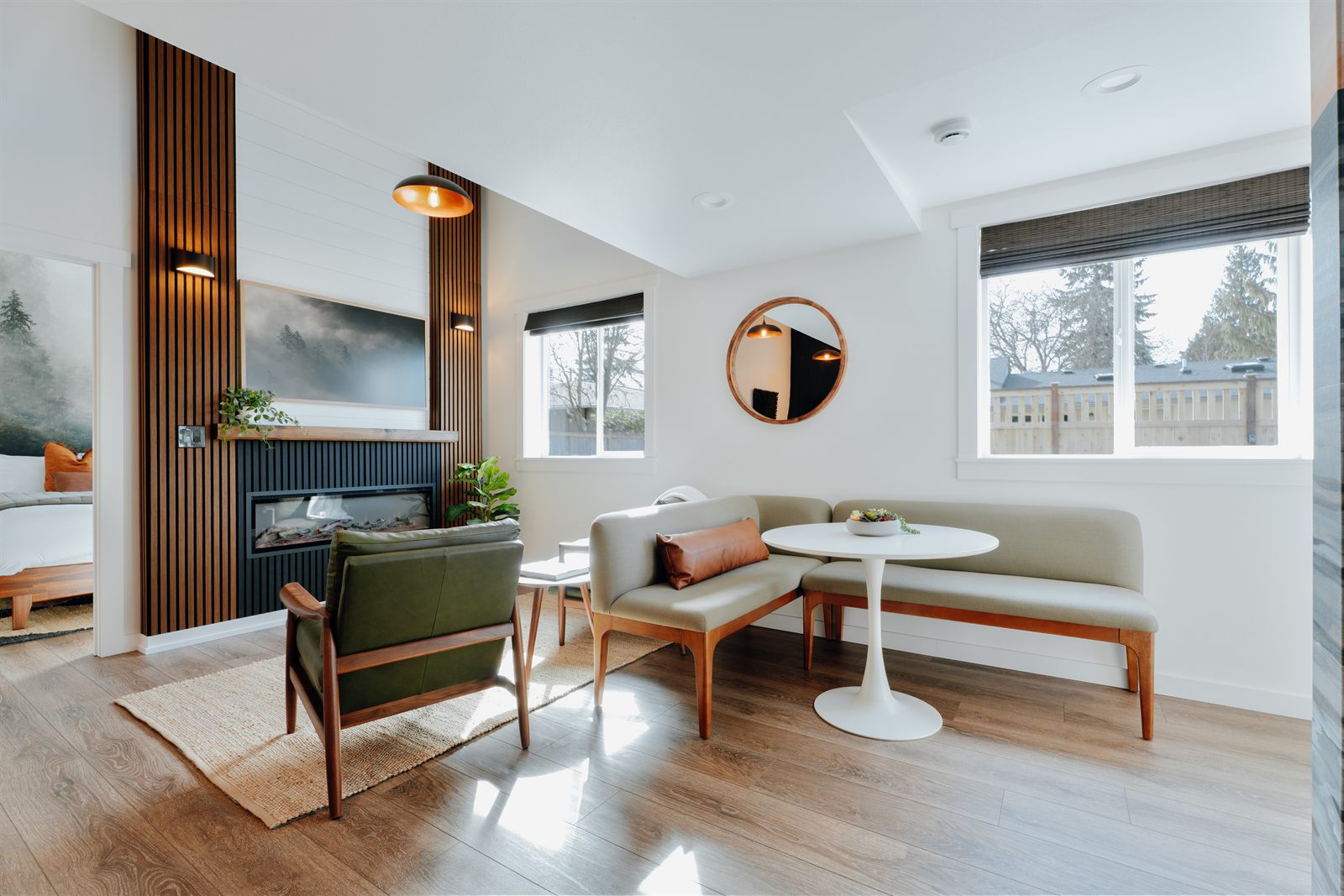
The fix that moved the needle most for us was virtual staging. When a few tenants moved out during a management transition, we tested adding furniture to the listing photos with AI. Within minutes of listing on Zillow we were getting flooded with inquiries, and showings jumped by about 50%. The crucial rule: we never changed a single hard surface. Same floors, same walls, same windows, just furniture added so people could picture their life in the space. Tenants actually thanked us, because the staged photos helped them visualize the unit while still representing it accurately.
Doing it by hand was painful, though. You could only stage one photo at a time, angles came out inconsistent, and the AI would sometimes change the flooring or delete a door. That babysitting is exactly the problem I built RentStager to solve: you upload your photos, pick a style, and get back accurately staged images in seconds, with the guardrails already in place so it never touches your hard surfaces.
Even with no tools at all, you can improve your photos today: shoot at eye level, use natural light, and angle toward the window. Stop posting overhead-lit, wide-angle shots that make rooms look cold and small.
Get it in front of everyone
List on every major site (Apartments.com, Zillow, Zumper, Realtor.com, Facebook Marketplace, the local MLS) and, just as importantly, put a FOR RENT sign out front. One free trick that's worked well for us: make a small update to your Zillow listing every morning. The algorithm prioritizes new and recently updated listings, so a tiny daily edit bumps you back to the top of search.
Create urgency and lower friction
Run staggered showings with Saturday open-house windows. Concentrating prospects into a tight window creates urgency and gets applications in faster. During slow months, sweeten the deal: offer a partial first-month discount, allow a 6 to 9 month lease so the renewal lands in the spring or summer leasing season, and consider allowing pets (with a pet fee) to widen your applicant pool.
If you want the full automated version of this leasing machine, including the 24/7 call handling and follow-up that keeps leads from slipping, I broke that down in how I replaced two property managers with one remote hire.
Turn cheaper: tenant-proof your finishes
Here's the other half nobody likes to talk about. Tenants are going to cause wear, no matter how good they are. The question is whether you've chosen finishes that shrug it off or finishes that need replacing every turn. Every dollar you don't spend on a make-ready is a dollar of NOI you keep.
There's a deeper reason finish quality matters: the condition of your unit attracts a certain kind of tenant. Years ago I bought a foreclosure and a tenant took it the same weekend, as-is, before we'd even done a trash-out or cleaned the carpets. I thought I'd hit the jackpot. Five years later I hadn't gotten a single repair call, but when they moved out the place was wrecked: a child had drawn all over the walls, cabinet doors were missing, the dog had chewed the door jambs, and the oven was the dirtiest I've ever seen. The lesson stuck. Skimp on the updates and you attract tenants who live that way. So next time you're wondering whether those stained carpets can survive one more tenant, you're usually better off replacing them, taking the write-off, and attracting a tenant who'll pay more for quality and treat it that way. Deferred maintenance like this is one of the quiet profit leaks I cover in 10 landlord mistakes that drain rental returns.
These are the choices we've landed on after years of expensive lessons:
- Flooring: hard surface over carpet. Carpet lifespan depends entirely on the tenant, and with pets it can be just a couple of years. Laminate and luxury vinyl plank cost more up front (subfloor prep) but last far longer and clean up easily between tenants. Where we still use carpet in bedrooms, we pick the darkest multi-colored option to mask stains, and we offer renewing tenants a free annual carpet cleaning. They read it as a kind gesture. It's really us protecting the investment.
- Appliances: buy new, skip the gadgets. We used to feel clever buying refurbished appliances. They lasted about 14 months. New ones last 7-plus years, so they're cheaper over time. And avoid refrigerators with ice makers and water dispensers. They break, they're hard to repair, they need filters your tenant won't change, and they leak onto your floors.
- Skip the things tenants reliably destroy. Garbage disposals cost more to fix than to replace and get fed chicken bones, so we stopped installing them. Same with garage door openers, which get knocked off-track, dented, and lost. Cheap plastic blinds bend and are impossible to clean, so we switched to weighted wooden blinds without strings. They cost about 4x more and last many times longer.
- Standardize your paint. Pick one interior color and two exterior colors (body and trim) and use them on every property. We learned this after trying to match leftover flip paint and never getting the color right. Standardizing means touch-ups are instant. We use a quality paint that goes on smooth and wipes clean.
- Rekeyable locks and a lockbox. Stop keeping boxes of locks and piles of mislabeled keys. Rekeyable locks let you change the key without changing the hardware, and a coded contractor lockbox on every property means you can grant access from anywhere and change the code whenever you need.
Know what a renovation actually costs
When you do turn a unit or buy a value-add, estimate the work with real numbers. Across the seven states where I own, here's what a 2-bed 1-bath runs (double these in high-cost markets like Washington or California):
| Scope | Cost | What's included |
|---|---|---|
| Make-ready / turn | $5,000 to $7,000 | Interior paint, some flooring, cleaning |
| Medium renovation | ~$9,000 | Paint, flooring throughout, light fixtures, patches |
| Full renovation | $14,000 to $16,000 | Paint, flooring, small kitchen, appliances, electrical |
Budget about $6,000 to replace a heat pump or AC unit. To estimate before you've been inside, drive the exterior (siding, windows, roof, doors, HVAC, drainage) and study interior photos. A tenant who's been in place 4-plus years almost always means flooring and paint are due, and unusually low rents on a rent roll usually signal condition problems.
And don't assume you always need a contractor. When a tenant moved out of one of our Everett duplexes with tired 1950s kitchen vinyl, my husband and I installed peel-and-stick vinyl plank from the store ourselves: two boxes for about $118, a box cutter, and a weighted roller. The one thing the box didn't mention was priming the existing floor first (prime, let it dry 24 hours, ideally let the planks acclimate 48). Total install was about four hours, it's water-resistant, perfect for a kitchen, and it looks great.
The compounding part
Faster leasing and cheaper turns aren't one-time wins. They're permanent improvements to your net operating income, and because value equals NOI divided by the cap rate, they raise what the property is worth too. I covered that whole engine in how to maximize NOI on your rentals.
So this week, pull up your worst-performing unit. Ask two questions: how fast could I lease it if the photos were staged and the price was right, and what am I replacing every single turnover that I could just stop installing? The answers are usually worth more than the next property you're tempted to go buy.
This article is educational and reflects my own experience. It isn't legal or financial advice. Landlord-tenant and fair-housing rules (including pet and assistance-animal laws) vary by location, so verify the rules where you own before acting.